


Studying at university
/
11 August 2026
Top soft skills you will develop at university for career success
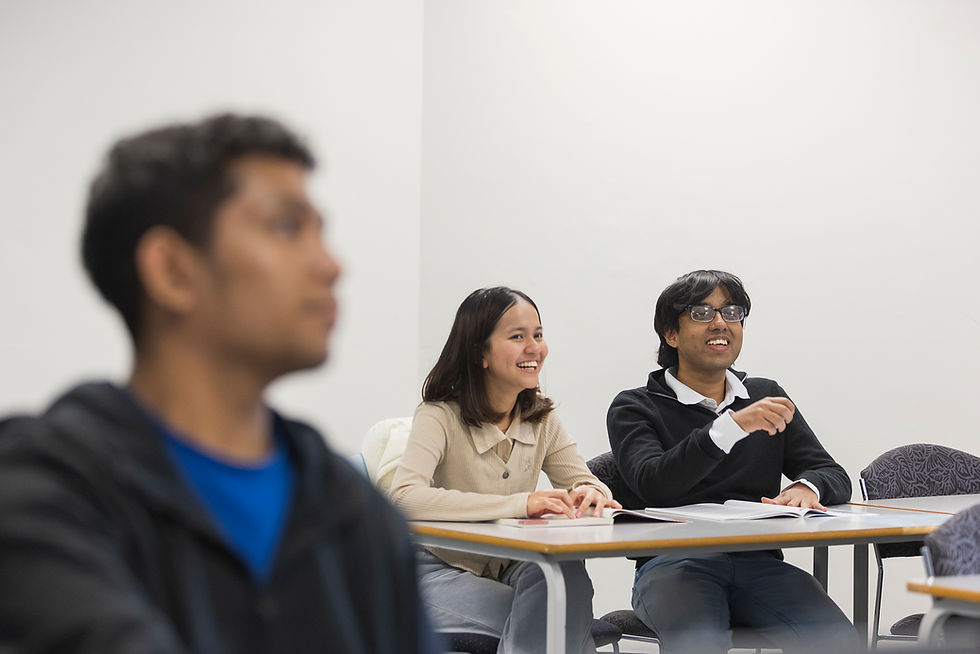
University is an exciting time where you’ll learn a wide range of skills to prepare you for your future career. It's not only a place to gain technical knowledge, but also where you'll develop the skills needed to work well with people, manage responsibilities, and respond to new challenges.
These abilities are called soft skills or transferable skills because they can be applied across different roles and workplaces. While technical skills may help you get a particular position (e.g. coding for a software developer), soft skills can influence how well you communicate, collaborate, solve problems, and adapt to new situations. Harvard University says that 85% of job success comes from having well-developed soft and people skills.
In this blog, we will explore the top soft skills you will develop at university to support your future career.

The top soft skills
Communication
Communication is the ability to express information and ideas clearly through speaking, writing, listening and non-verbal actions. At university, you will need to contribute to class discussions, explain complex topics, write essays, and talk to people from different backgrounds.
How to develop communication skills
Join class discussions and ask questions.
During group projects explain your ideas to your team, listen to their suggestions, and communicate regularly on your progress.
Deliver presentations without reading from the slides.
Practise positive non-verbal behaviour such as making eye contact, warm tone of voice, standing up straight etc.
Adapt your communication style for different audiences.
To improve essay writing, you can read academic articles, create an outline before drafting, ask lecturers for feedback, and use student support services and workshops.
Join a debating, public-speaking or student society.
Teamwork
In most workplaces, you will be working teams. This involves collaborating with people who all have different ideas and ways of working so it’s important to listen, be adaptive and see things from different points of view before arriving at a decision.
How to develop teamwork skills
Group projects – share ideas, agree on roles, deadlines, and communication methods at the beginning of each project.
Give constructive feedback and remain open to other people's views.
Use collaboration tools (e.g. Microsoft Excel) to organise tasks and share information.
Participate in a student club, sports team or volunteering activity.
Problem-solving
Problem-solving is the ability to understand an issue, consider possible solutions, and choose an appropriate course of action. Every business will face problems at some point. Employers value people who can come up with answers, predict future challenges and act to prevent them.
How to develop problem-solving skills
Consider several possible solutions and select the best course of action.
Use evidence to compare the advantages and disadvantages of each option.
Participate in business competitions, simulations, or case study activities.
Review your results and identify what you can do differently next time.
At university, you’ll learn how to solve issues more confidently and promptly; training you to be resilient in your future job. Remember, there is always a solution to every problem. The key is not to panic but find out what resources are available to you and take the best course of action. Below are some examples.
Problem | Possible solution |
You feel nervous participating in class. discussions. | Before class, prepare some questions to ask or contribute your ideas to smaller group activities. |
Several assignments are due in the same week. | Prioritise tasks by deadline and difficulty, break up large tasks into smaller steps, and create a study schedule. |
A group member is not completing their assigned work. | Speak with them privately, clarify responsibilities, agree on new deadlines. |
You are finding it difficult to balance study and part-time work. | Review your weekly commitments, reduce non-essential activities, and discuss moving shifts with your employer. |
Technology breaks down before an assignment deadline. | Save work regularly, contact technical support or go see your lecturer to explain what has happened. |
Time management
At university, you will often have to balance classes, assignments, exams, work, and personal commitments. In your future job, you will also be required to handle several things at once. Time management involves prioritising tasks, using your time productively, and avoiding distractions to meet your deadlines.
How to develop time management skills
Use a calendar to record deadlines and important dates.
Break large assignments into smaller, manageable tasks.
Set weekly priorities, set reminders, and block out time for specific tasks. You could use an app (e.g. Todoist) which highlights your most important tasks for the day and tracks your study goals.
Start your research early and allow extra time for editing and unexpected delays.
Reduce distractions (e.g. phone notifications) during study periods.
Review your schedule each day and adjust when priorities change.
Critical thinking
Critical thinking means examining information carefully instead of accepting it as truth. It involves questioning evidence, identifying bias, comparing views, and reaching a conclusion. At university, whether it’s an essay question or assignment task, approach the problem from different angles, evaluate potential outcomes, and develop solutions.
How to develop critical-thinking skills
Check the reliability and date of information sources.
Ask what evidence supports a claim.
Compare different viewpoints on the same issue.
Explain why you agree or disagree with an argument.
Use feedback from assignments to strengthen your reasoning.
Adaptability
Workplaces and technologies can change quickly. Adaptability is the ability to respond positively to uncertain situations, adjust your approach, and continue learning when things change.
If you’re an international student, you’re already learning to adapt to a new country and culture, a different learning environment, living on your own or with other students, paying bills or having a part-time job. Always ask for help from support services if you’re struggling with any changes or need advice on how to better manage them.
How to develop adaptability
Learn new subjects or skills outside your usual interests.
Learn to use new software and digital tools.
Treat constructive feedback from your teachers as an opportunity to approve.
Work with classmates who are from different backgrounds or perspectives.
Develop different plans when the original plan does not work.
Leadership
Leadership is not limited to managing a team or holding a formal title. It can involve taking initiative, supporting others, making responsible decisions, and helping a group achieve their goals.
How to develop leadership skills
Volunteer to coordinate part of a group assignment.
Take responsibility for organising meetings or tracking deadlines.
Mentor or support another student.
Join the committee of a student club or society.
Encourage quieter team members to contribute.
Practise resolving disagreements fairly and respectfully.

Creativity
Creativity means approaching challenges from different perspectives, developing new ideas, and finding better ways of doing things. At university you’ll need to come up with creative ideas for your assignments. Teachers will be looking for answers that are ‘outside-the-box' (i.e. different and unique).
How to develop creative skills
Explore different viewpoints.
Join creative activities such as writing, design and music.
Brainstorm several solutions to the same problem.
Test ideas that are unfamiliar.
Experiment with new software tools.
Join clubs and competitions.
Seek constructive feedback.
Emotional intelligence
Emotional intelligence is the ability to understand and manage your own emotions while recognising the feelings and perspectives of others. It can support better communication, teamwork, leadership, and conflict resolution.
How to develop emotional intelligence
Pause before reacting to stressful situations.
Consider how your words and actions may affect other people.
Ask for feedback on how you communicate and collaborate better.
Practise empathy by trying to understand another person’s perspective.
Learn to disagree without making a discussion personal.
Identify situations that affect your motivation, patience, or confidence.
Cultural intelligence
Universities often bring together people from different countries, cultures, and life experiences. Cultural intelligence is the ability to understand, adapt to and work effectively with people from different cultural backgrounds. You need to be aware that people communicate, make decisions, manage time or approach work differently. It's an essential skill particularly in multicultural countries like Australia.
How to develop cultural intelligence
Work with classmates from diverse cultural backgrounds.
Ask respectful questions rather than relying on stereotypes.
Attend cultural events and international student activities.
Learn how communication and workplace expectations may differ across cultures.
Be open to unfamiliar perspectives and ways of solving problems.
Reflect on how your own cultural background influences your assumptions.
Resilience
University life can include challenging assignments, unfamiliar situations, competing deadlines, and occasional setbacks. Resilience is the ability to recover from difficulties, learn from them, and continue working towards your goals.
How to develop resilience
Set realistic goals and recognise gradual progress.
Ask for help before a problem becomes overwhelming.
Use academic, wellbeing and career-support services.
Treat mistakes as information about what to improve.
Maintain routines that support sleep, exercise, and wellbeing.
Focus on what you can control and identify your next practical step.
Conflict management
Workplace conflict can occur when people have different goals, expectations, values, communication styles or ways of working. Conflict management is the ability to address disagreements calmly and constructively. At university, there may be times when your team disagrees with how the project should run, blame each other when it’s stressful or receive poor results.
How to develop conflict management skills
Listen carefully to each person's point of view before responding.
Ask questions to clarify and express concerns respectfully.
Practise empathy and communication to manage disagreements.
Identify shared goals and work towards a practical solution.
At Kaplan International College Adelaide, our College Services Team will help you settle into the College and offer you any academic or personal guidance you may need. Read more about studying at university in Australia.

